VISOMEX® – viscoelastic memory foam
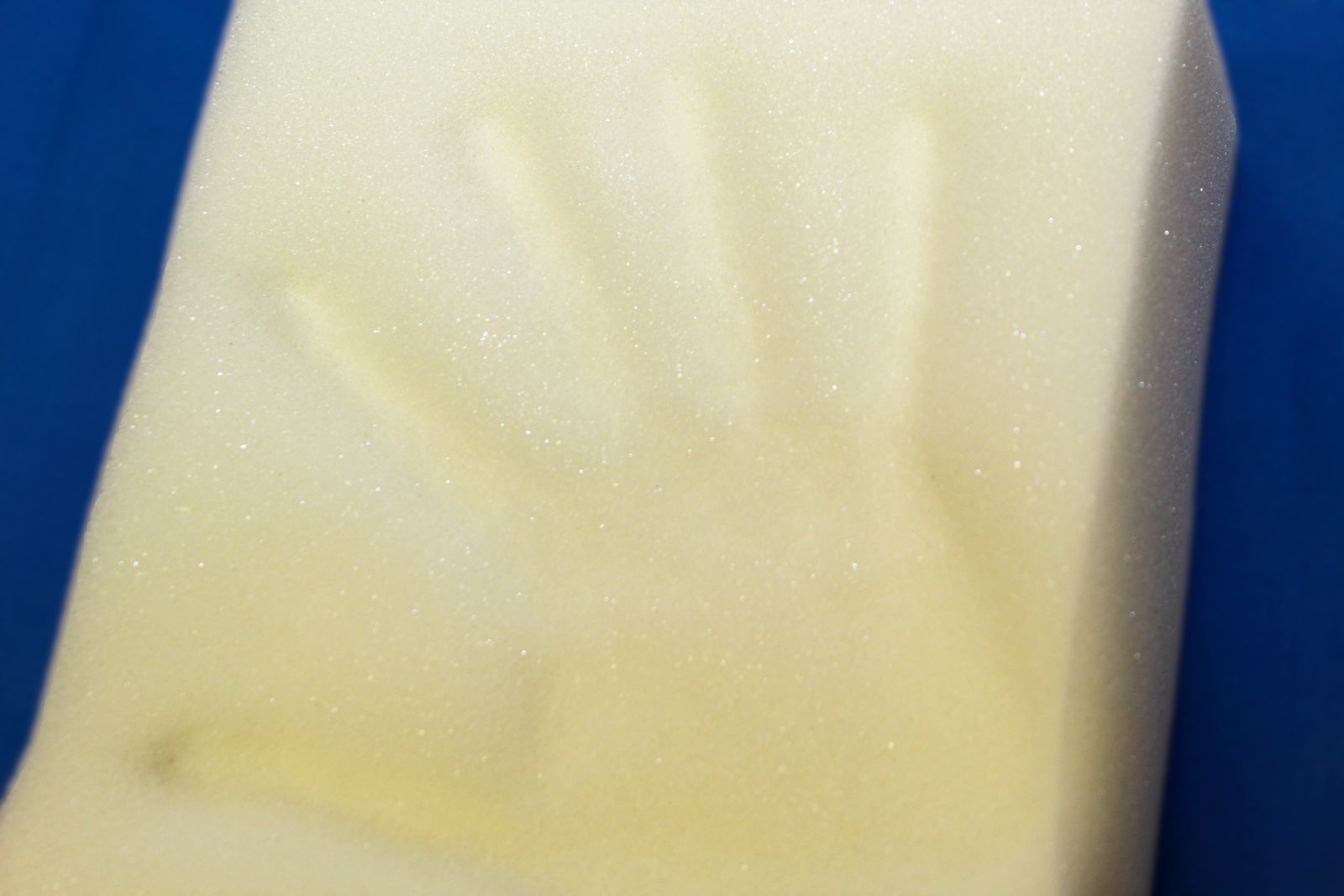
VISOMEX® is our viscoelastic foam, better known as memory foam. It responds to pressure and body heat: warmed by body contact it becomes softer, slowly conforms to the body contour and spreads the weight over a larger area, dissipating pressure peaks. After the load is removed it slowly returns to shape — the memory effect.
An important difference to gel foam (GELAX®): viscoelastic foam firms up at cool temperatures and needs a short warm-up in a cold bedroom before reaching full adaptability. For sleepers who run warm or perspire at night, gel foam (GELAX®) is the better choice. Recommended density for mattress applications: RG 50 and above for good quality.
Properties at a glance
| Property | Characteristics | Typical use |
|---|---|---|
| Response to pressure | Slow, body-conforming | Pressure relief, shoulders, hips |
| Response to heat | Softer when warm, firmer when cold | Temperature-dependent |
| Recovery | Slow (memory effect) | Contour briefly retained |
| Pressure distribution | Very even, large-area | Orthopaedic applications |
| Density | From RG 50 for good quality | Premium mattresses, toppers |
| Compression hardness | SH 16 to SH 30 (typical) | Soft to medium-soft |
Applications
- —Mattresses: as a comfort layer (typically 3–6 cm) over a HYLEX® HR cold foam core
- —Toppers: as a standalone pressure-relieving layer on existing mattresses
- —Care mattresses: particularly effective for preventing pressure sores (decubitus)
- —Seat cushions for long sitting: wheelchairs, office chairs, vehicle seats
- —Dog beds: orthopaedic inserts for older or joint-stressed animals
Who is VISOMEX® particularly suited for?
- —Side sleepers with pressure pain at shoulder or hip: VISOMEX® spreads pressure across a large area, relieving exactly where bones press into the mattress
- —People with back pain or disc problems: the heat-activated conforming relieves pressure points along the spine
- —The care sector and decubitus prevention: viscoelastic foam is the standard material for soft-positioning mattresses that prevent pressure sores in bedridden patients
- —Wheelchair users: as a seat-cushion insert, VISOMEX® reduces pressure points during long sitting
- —People who sleep cool: VISOMEX® stores body heat and keeps the sleeping surface warm
- —Not suitable for heavy perspirers: VISOMEX® retains heat and can cause heat build-up — in that case we recommend GELAX® or HYLEX®
Maximum pressure relief through heat- and pressure-sensitive body conforming
Submit an enquiryFrequently asked questions about VISOMEX®
What is viscoelastic foam and how does it work?+
Viscoelastic foam responds to body heat: it softens on contact, conforms to the body shape and spreads weight across a larger area — reducing pressure peaks at shoulders, hips and other sensitive spots. After the load is removed it slowly returns to shape (memory effect). At cool temperatures it firms up and needs a short warm-up.
What is the difference between memory foam and gel foam?+
Memory foam (VISOMEX®) responds to heat, adapts slowly and retains warmth, which can create a warmer sleeping climate. Gel foam (GELAX®) responds directly to pressure, stays temperature-neutral and is more breathable — the better choice for warm sleepers or cool bedrooms. Memory foam suits those seeking maximum pressure relief without a tendency to overheat.
What density should a good memory foam topper have?+
We recommend densities of RG 50 and above for viscoelastic toppers. Lower densities (below RG 40) are less durable and deform sooner. CT Formpolster produces VISOMEX® in various densities and layer thicknesses.
Which sleeper types is viscoelastic foam particularly suited for?+
Especially side sleepers with pressure at shoulder and hip, people with back or joint complaints, and anyone who prefers a soft, enveloping lying feel. For warm or very active sleepers we recommend GELAX® instead.
Which foam is suitable for preventing pressure sores (decubitus)?+
Viscoelastic foam such as VISOMEX® is the standard material for soft-positioning mattresses in decubitus prevention. It spreads body weight across a large area, reduces localised pressure peaks and relieves at-risk areas such as the tailbone, heels and shoulder blades. CT Formpolster produces VISOMEX® in the densities and thicknesses usual for care mattresses.
Is viscoelastic foam suitable for people who perspire heavily?+
Only to a limited extent. VISOMEX® stores body heat — pleasant for cool sleepers, but potentially too warm for heavy perspirers. If you sweat at night, GELAX® or HYLEX® are the better choice: both are more breathable and temperature-neutral.
Request VISOMEX®
Please state layer thickness, density, application and dimensions. We will get back to you with a concrete assessment.