
Acoustic foam and soundproofing solutions from the manufacturer
Effective acoustic solutions have to work where noise is created. Our foam solutions for noise damping and acoustics are designed to absorb sound, reduce vibration and minimise unwanted noise — taking airborne sound, mechanical loads and the specific installation situation into account.
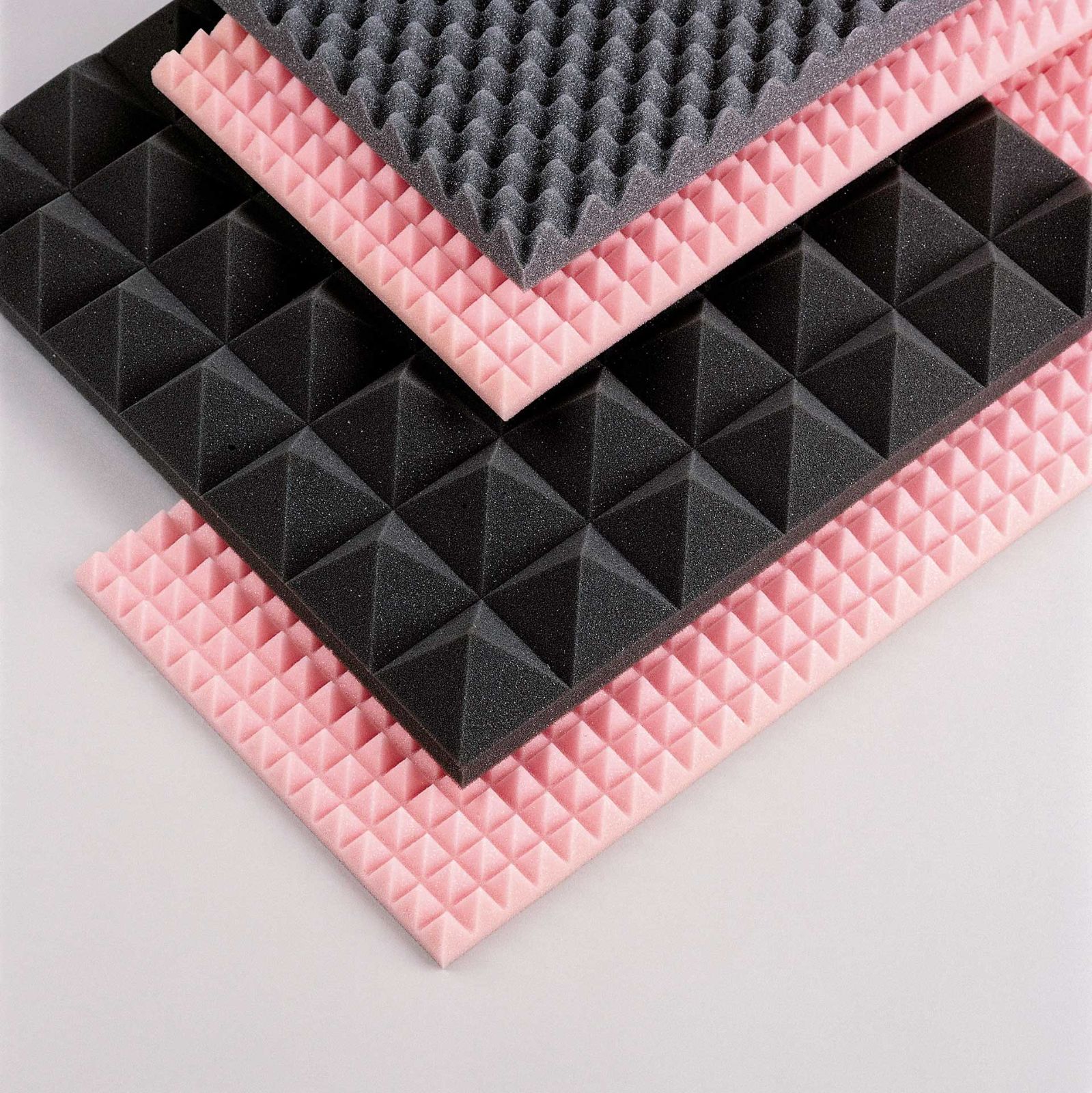
Sound absorption vs. sound insulation
Sound absorption reduces reverberation within a room by converting sound waves into heat. Sound insulation prevents sound transmission between rooms or components. CT Formpolster supplies materials for both applications, matched to the specific use.
Convoluted panels and acoustic foam
Convoluted (egg-crate) panels and profiled acoustic foam are available in various dimensions, as standard products or custom geometries. They are used in interior fit-out, recording studios, vehicles and technical housings.
Vibration damping
Vibrating components can be acoustically decoupled through targeted material selection. We match density, resilience and damping behaviour to the specific machine load — reliable even in continuous operation.
Applications
- —Machine and plant engineering: damping inserts, housing linings
- —Interior fit-out: acoustic panels for walls and ceilings
- —Technical devices: moulded parts and inserts for housings
- —Automotive and vehicle construction: sound absorbers and panelling elements
Material and geometry are matched precisely to each application — from simple inserts to complex moulded parts.
Request an acoustic solution
Describe your application and requirements.
Frequently asked questions
Where can I buy acoustic foam or soundproofing panels directly from the manufacturer?+
CT Formpolster in Löhne produces acoustic foam, convoluted panels and soundproofing panels in various dimensions, as standard products or custom geometries — for recording studios, offices, machine housings, vehicles and interior fit-out.
What is the difference between sound absorption and sound insulation, and which material do I need?+
Sound absorption reduces reverberation and noise levels within a room by converting sound waves into heat (e.g. acoustic foam on a wall). Sound insulation prevents sound transmission between rooms or components and requires mass or decoupling. CT Formpolster supplies materials for both applications, matched to the specific use.
Which German manufacturers produce convoluted panels and acoustic foam to measure?+
CT Formpolster in Löhne makes convoluted panels and profiled acoustic foam in various dimensions, as standard products or custom geometries — suitable for recording studios, interior fit-out, machinery and vehicles.
How can machine noise be reduced with foam?+
Foam inserts and moulded parts in housings, plus vibration-damping mounts, are effective for machine noise. CT Formpolster matches the foam’s density, resilience and geometry to the specific machine load so that vibrations are decoupled and airborne sound is absorbed.